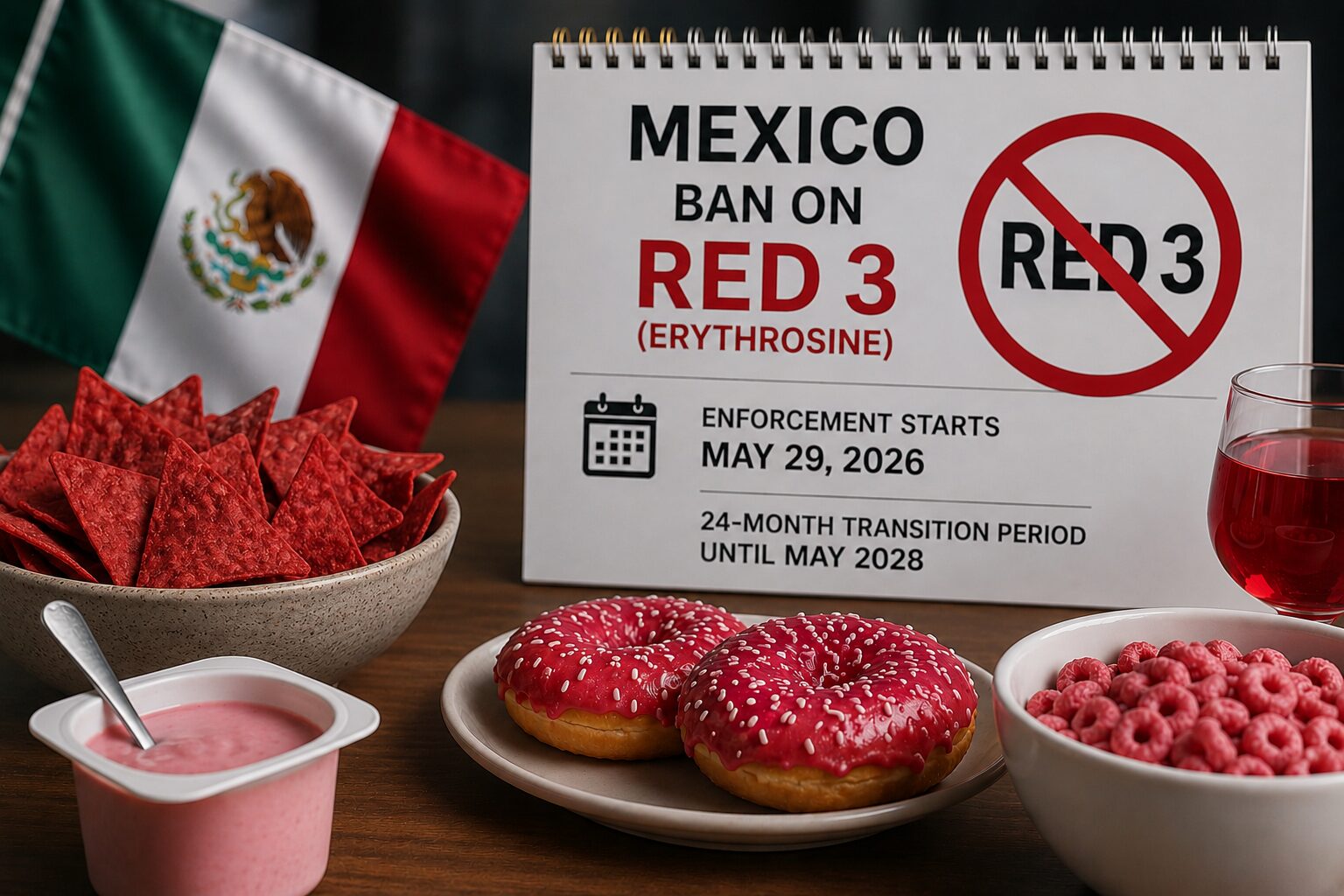

Mexico bans Red 3 (Erythrosine): Another milestone in LATAM’s transition toward natural colors
The regulatory landscape for food colors in Latin America continues to evolve. As of May 29, 2026, Mexico has officially prohibited the use of Red 3 (Erythrosine) in food and beverage applications. While enforcement begins immediately, authorities have established a 24-month transition period, allowing manufacturers until May 2028 to reformulate affected products.
This development marks another important milestone in the region’s journey toward cleaner labels and safer, more natural food ingredients.
Which product categories are affected?
The ban impacts a wide range of food and beverage categories, including:
- Dairy products
- Beverages
- Bakery and confectionery products
- Alcoholic beverages
- Cereal-based products
- And several other processed food applications
For manufacturers relying on Red 3 to achieve bright pink, red, or purple shades, reformulation planning should begin as soon as possible.
More than a regulatory update
Mexico’s decision reflects a broader global movement. Regulatory authorities, food brands, and consumers are increasingly aligning around the demand for natural ingredients and transparent labeling.
What was once considered a market trend has now become a business reality. Across North America, Latin America, and Europe, food manufacturers are facing growing pressure to reduce or eliminate synthetic colors and transition to natural alternatives.
The opportunity behind the change
While regulatory changes often present challenges, they also create opportunities for innovation.
Natural colors derived from sources such as carmine, anthocyanins, beetroot, paprika, turmeric, and other botanical ingredients enable brands to maintain visual appeal while meeting evolving regulatory and consumer expectations.
Companies that act early can secure supply chains, optimize formulations, and stay ahead of future regulatory developments.
The time to act is now
With a transition period extending until May 2028, manufacturers have time to prepare—but waiting may increase reformulation risks, supply constraints, and development timelines.
Mexico’s ban on Red 3 sends a clear message to the food industry: the shift toward natural colors is accelerating across LATAM.
At BioconColors, we help food and beverage manufacturers navigate these regulatory changes with reliable, high-performance natural color solutions tailored to their applications and market requirements.
Looking for a Red 3 replacement?
As Mexico moves forward with the ban on Red 3 (Erythrosine), now is the time to evaluate alternative color solutions for your products. At BioconColors, we help manufacturers identify and implement natural color replacements that meet both regulatory requirements and product performance expectations.
Contact us today to discuss your Red 3 replacement needs and discover the best natural color solution for your application.
The transition to natural colors is no longer a trend. It is the new reality.